
Subscribe to Our Blog

With RSS feeds, you don't have to visit our site everyday to keep up to date. Simply subscribe to our blog via RSS or Email and our posts will come to you!

a father plans for his minor beneficiaries.

Oftentimes while discussing estate planning when minor children are involved, parents tend to focus on the question, “who will our children live with if we were to die?” While this is an important part of their estate plan, of equal importance is how assets being distributed to a minor will be handled. Most people say that their assets should be distributed to their child or children if their spouse predeceases them (if married); this includes designating their child or children as beneficiaries. But if those children are minors, numerous issues could develop. And these issues are not just exclusive to parents of minor children; it can include others who are leaving gifts to minors, such as grandparents to grandchildren. Assets affected by not properly planning for minors include real estate, financial accounts, vehicles, and anything else owned by a decedent at the time of their death.

Some examples of failing to plan properly for minor beneficiaries include:

  1. Not including a contingent trust in your will/trust. If a person has not attained the age of eighteen, they will not be allowed to inherit assets from your estate. If they have attained the age of eighteen, then they will be able to inherit. But do you want an eighteen-year-old to inherit money that they are free to spend as they wish? Instead, what is needed is a contingent trust that states that if a person is under a certain age, their share will be held in a trust until they reach a specified age. This trust would only be created if, at the time of your death, that individual is under the specified age. The funds would then be held in trust and managed by a trustee that you appoint in your will or trust. Funds would be available to pay for expenses on the individual’s behalf, such as education, medical expenses, a down payment on a first house, etc. The only time the individual would receive money to use however they want would be at the ages you designate. For example, a common estate plan could say that a child may get 50% at the age of twenty-five and then the remainder at age thirty. However, you can state whatever ages and percentages you feel are best. If a child is over that age at the time of your death, then they would get the entire distribution, and it would not be subject to a trust. Having a contingent trust such as this will ensure that the funds are held and properly managed until a suitable age.
  2. Designating a minor child as a beneficiary of your financial accounts. Many people who meet to discuss estate planning will state that they have their spouse designated as primary beneficiary and their children as contingent beneficiaries. The issue with this is that a beneficiary designation supersedes what is stated in your will/trust. So if your will/trust has a contingent trust included for minor children with distribution ages and percentages (such as suggested above), but you do not name that trust as contingent beneficiary for the child, then the beneficiary designation of the minor child will control, and it will not be distributed to the trust. This means that if they are still a minor, the company holding the funds will continue to manage the money until the child turns eighteen. Upon turning eighteen, the child can receive the funds. Oftentimes this is where the bulk of a person’s assets reside—in financial accounts. This could be a sizable amount of money that a child is receiving at a very young age.
  3. Improper planning for a minor might necessitate the need for court proceedings. If you don’t include a contingent trust in your estate plan or properly designate the beneficiary for a minor, a court proceeding may be needed to establish a conservatorship or custodial account for the child. Since a minor would not be able to receive funds until they turn eighteen, an adult would need to be appointed by the court to manage the funds on the child’s behalf. Conservatorships and custodial proceedings are costly and typically involve ongoing court responsibilities. Administrative costs and taxes are paid out of the child’s funds, which can deplete what they will ultimately receive. In addition, the court loses jurisdiction over the child once they turn eighteen, meaning the assets being managed by the conservator or custodian are then turned over to the child to be spent as they wish.

These are just a few of the issues that crop up when people do not properly plan for gifts to minor beneficiaries. Not having a proper plan can mean significant legal costs and time-consuming court proceedings. It is important not to rely on what your neighbor told you to do, or an internet search, or what your parents did forty years ago. Instead, meet with an estate planning attorney who can inform you as to the risks of designating gifts to minors and the proper estate planning that can be done to hopefully prevent the issues that happen when a plan is not done properly.

Read More


estate tax minimization concept

The saying goes that you can’t know what you don’t know; and nowhere is this statement more apt than for do-it-yourself estate planners. Many people are completely unaware of the potential for either a federal or Minnesota estate tax. They have often seen that there is no “death tax” on our assets or have heard that assets should get a “step-up in tax basis” at death to avoid any taxes on heirs. People have heard the accurate statement that there is no “inheritance tax” in Minnesota and assume wrongly that it means that no taxes ever have to be paid as part of an estate. Here are three dangers when it comes to making mistakes about taxes and do-it-yourself plans:

  1. Not knowing the difference between federal and state estate tax liability. People may have heard that the federal estate tax exemption amount is up to $15,000,000.00 per individual, only taxing the portion of a deceased person’s estate that exceeds that relatively high amount. Minnesota’s estate tax exemption amount is nowhere near as gracious, being significantly less per individual. In addition, because the federal amount allows for portability between spouses, allowing a surviving spouse to take advantage of the deceased spouse’s exemption amount, a surviving spouse can effectively double that $15,000,000.00 amount to take advantage of a $30,000,000.00 estate tax exemption. Not so in Minnesota. There is a way to preserve portability and take advantage of a spouse’s estate tax exemption, but it must be set up by a lawyer who understands how laws and regulations actually work.
  2. Assuming that because you aren’t “rich,” you don’t need to worry about estate tax. People with modest estates and lifestyles may still be subject to Minnesota estate tax. Just because someone does not own a million-dollar home or multiple lake cabins, that does not mean that person avoids a taxable estate. Often, life insurance policies may make the difference between a taxable and non-taxable estate. This comes as a surprise to many people because they were often told by brokers that their life insurance policies are “tax-free” and “pass to named beneficiaries without taxes.” The problem comes where the considerably large death benefit amount is considered part of a decedent’s gross estate, despite the fact they never had access to that money. There is a way to reduce the overall size of a gross estate, but it requires more than a do-it-yourself attitude; it requires an estate planning attorney’s careful guidance.
  3. Mistaking how lifetime gift and estate tax exemptions interact. Because there is no “gift tax,” do-it-yourselfers often plan to simply give away their assets to avoid any possibility of taxation at death. They may even know that gifts to one recipient over a certain amount per year need to be declared on a tax form. But gifting can have the effect of lowering the estate tax exemptions (both federal and Minnesota). This is because the lifetime gift exemption and the estate tax exemption amounts are linked (despite having different rules around each). Even if the gift was effective and planned for, there is a possibility that Minnesota could “claw back” the gift amount to attribute it to the estate. An estate planning lawyer can help you understand these topics and plan for the issues.

There are many laws and regulations around estate taxes at death, and all of them include scrutiny from places like the IRS and Minnesota Dept. of Revenue. Inaction or—even worse—mistakes that were made in minimizing tax liability are extremely costly later on. And the mistake of the do-it-yourself estate plan will not be discovered until it is far too late. Don’t rely on what you don’t know. Instead, contact one of the attorneys in the Estate Planning Department at Henningson & Snoxell, Ltd. to assist you with your estate planning, estate administration, and elder law needs.

Read More


Employer’s Guide to Form I-9 Compliance and Audit Preparation

02.17.2026 Written by: Business Law Department

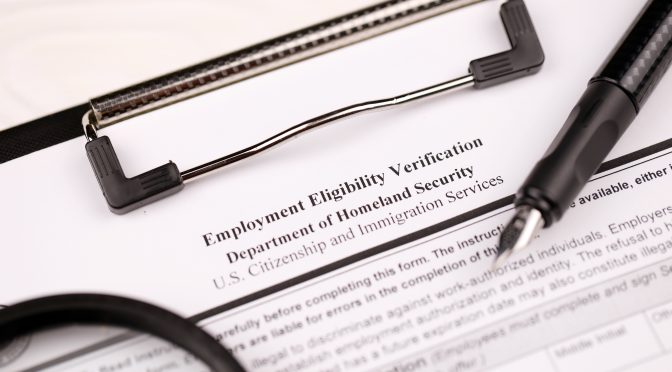
A picture of Form I-9

While immigration enforcement activity in Minnesota may be shifting, employer obligations under federal Form I-9 requirements remain unchanged. Being prepared for federal immigration inspections allows business owners to respond professionally and confidently if U.S. Immigration & Customs Enforcement (ICE) or Department of Homeland Security (DHS) agents arrive at their workplace. Here are practical steps employers can take to prepare for a potential federal inspection.

1. Before Anyone Arrives: Conduct an Internal Form I-9 Audit

Performing an internal Form I-9 audit is an essential first step in preparing your business for potential federal scrutiny. Federal regulations state you must retain a Form I-9 for each person you hire for three years after the date of hire, or one year after the date employment ends, whichever is later.

A proactive audit helps you identify errors early and reduce compliance risks. An internal audit allows you to:

  • Review all employee Form I-9s for completeness and accuracy
  • Ensure supporting documentation is accessible
  • Verify all forms are stored in a centralized, secure location (separate from individual personnel files)

For more guidance and best practices for conducting an internal audit, visit: https://www.ice.gov/doclib/guidance/i9Guidance.pdf.

2. If ICE or DHS Arrives: Understanding the Inspection Process

If you receive a Notice of Inspection from a federal agency, you generally have three business days to compile all documentation requested in the Notice. After the review, ICE or DHS may issue several types of notices—some administrative, others indicating potential violations.

Important: An employer who knowingly hires or continues to employ unauthorized individuals will be required to cease the unlawful activity immediately. Failure to do so may result in civil fines and/or criminal prosecution.

3. After a Formal Inspection: Maintaining Compliance

Following an inspection, take the following steps to ensure ongoing compliance:

  • Ensure you receive all Form I-9s and supporting documentation back from federal agents
  • Be aware of any follow-up interactions or requirements you must fulfill
  • Verify that your hiring personnel understand how to properly complete Form I-9, verify employee documents, and maintain Form I-9s and supporting documentation in accordance with federal requirements

Regular internal audits and properly maintained Form I-9s are essential to minimizing risk during a federal inspection. If your business wants to proactively address compliance issues or prepare for a potential ICE audit, Henningson & Snoxell can assist with internal audits, compliance reviews, and ongoing support.

Contact our team today to ensure your organization is protected.

Read More


Pitfalls of DIY Estate Planning: Failing to Title Assets Properly

02.11.2026 Written by: Susan T. Peterson-Lerdahl

two people title assets improperly.

Of all the pitfalls relating to DIY estate planning, failing to title assets properly is the most widespread and most problematic issue. It is most widespread because informal “advice” about how to title assets is readily available and because assets can easily be beneficiary-designated. It is most problematic because title to assets is controlling. A few examples are illustrative:

  1. If a person adds a joint tenant to a bank account, the general rule is that the surviving joint tenant inherits the entire account. Legally, the bank balance is not part of this decedent’s estate upon his/her death, which means that the account balance is not available to pay bills and leftovers are not distributed to his/her estate beneficiaries. Such a result often fuels arguments between the decedent’s children, some of whom may contend that such an arrangement is “for convenience only” and therefore the joint tenancy account should be part of the estate.
  2. If a person adds a beneficiary to an asset—whether a bank asset, a brokerage account, a car, real estate, or a retirement account—the general rule is that the named beneficiary automatically inherits such asset and does not, legally, have to share it. This means that the asset is not part of the decedent’s estate and is not distributed to his/her estate beneficiaries. Further, if the named beneficiary predeceases the decedent, a probate proceeding is required.
  3. If a person dies owning sole title to an asset that is an interest in real estate or worth $75,000 or more, there must be probate administration under Minnesota law. While probate is a process that works, it is relatively slow and cumbersome. The law makes no exception for the surviving spouse. If the decedent, who owns the homestead in his/her sole name, is a married person, the surviving spouse must probate title to the homestead.

Simply put, if a person wants his or her Will to be applicable upon death, his/her assets must be titled in his/her sole individual name and NOT beneficiary-designated. Alternatively, if the person wants his or her trust to be applicable and wants to avoid probate, his/her assets must be titled to his/her trust prior to death OR be beneficiary-designated to his/her trust. Estate planning will only be successful in passing the asset on to the correct beneficiary in the most efficient manner if legal documents and title to assets are coordinated. This means that there is no one-size-fits-all estate plan and that each person’s estate plan must be customized for his/her wishes, assets, and estate planning documents. Such is the purview of an estate planning attorney and not one’s neighbor or bank teller.

Please contact one of the attorneys in the Estate Planning Department at Henningson & Snoxell, Ltd. to assist you with your estate planning, estate administration, and elder law needs.

Read More